
The Micro, Small and Medium Enterprises Development (Amendment) Bill, 2026
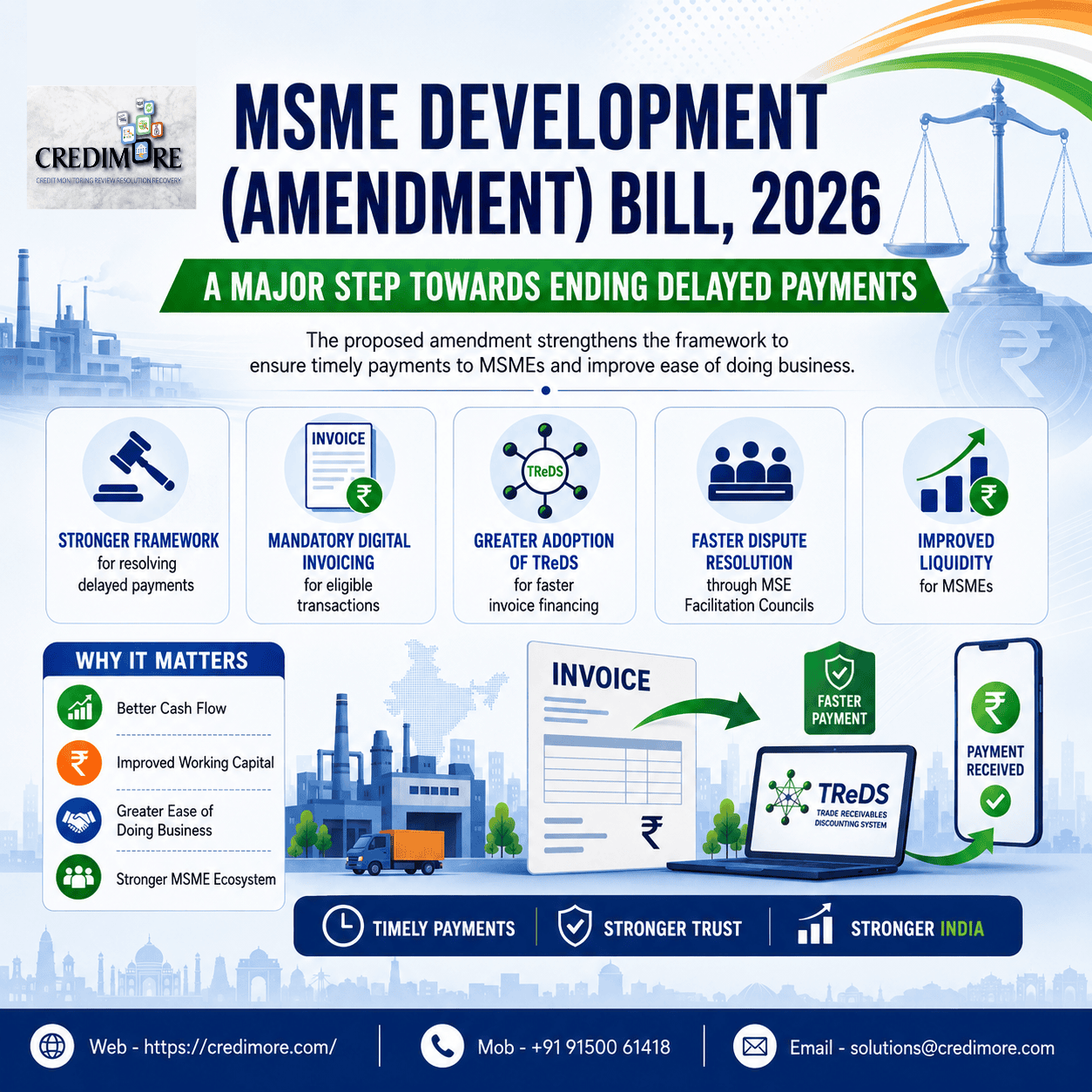
- The Micro, Small, and Medium Enterprises Development (Amendment) Bill, 2026 was introduced in Rajya Sabha on July 28, 2026. It seeks to amend the Micro, Small and Medium Enterprises Development Act, 2006. The Act aims to facilitate the promotion and development of Micro, Small, and Medium Enterprises (MSMEs).
- Classification of MSMEs: The Act classifies enterprises as MSMEs based on investment in: (i) plant and machinery in case of manufacturing, and (ii) equipment in case of services. It also specifies thresholds of investment for classification between micro, small, and medium enterprises. The Bill removes the thresholds and modifies the criteria. It empowers the central government to classify enterprises as MSMEs based on: (i) investment in plant and machinery or equipment and (ii) turnover. The thresholds will be specified by notification.
- Registration: Under the Act, a person intending to establish a medium enterprise engaged in manufacturing must file a memorandum with a specified authority. Other MSMEs may file the memorandum at their discretion. The Bill instead provides that the filing of the memorandum will be voluntary for all MSMEs. The central government will notify a digital platform for this purpose. State governments may also notify a digital platform for the same.
- Settlement through TReDS mandatory for CPSEs: The Bill adds that every central public sector enterprise (CPSE) must settle all invoices for procurement of goods or services from MSMEs on the Trade Receivables Discounting System (TReDS). TReDS is an RBI-regulated electronic platform that enables MSMEs to raise funds from financiers against invoices due from buyers. The central and state governments may mandate other public sector enterprises, authorities, or entities to settle invoices through TReDS.
- Timelines for mediation: The Act authorises Micro and Small Enterprises Facilitation Councils or mediation service providers referred by them to settle payment disputes by mediation. The Bill adds that mediation must be completed within 90 days from the date fixed for first appearance.
- Timelines for arbitration: Where a mediation is not successful, the Act requires the dispute to be referred for arbitration. The Bill adds that such reference must be made within 30 days from the date of termination of mediation. It also adds that an award must be made within 90 days from the date of completion of pleadings.
- Disputes on awards: The Act provides that an application may be made in a Court for setting aside an order/award of the Council after depositing 75% of the award. The Bill also allows such an application against a mediated settlement agreement. Pending disposal, the Court will order a percentage of the deposited amount to be paid to the MSME supplier. The percentage will be as considered reasonable by the Court. The Bill adds that if a case has been pending for more than six months, at least 50% of the awarded amount must be paid to the supplier.
- Decriminalisation of offences: The Bill adds that wilful furnishing of false information for registration will be punishable with: (i) a warning at first instance, (ii) a penalty between Rs 1,000 and Rs 50,000 for any subsequent contravention. Failure to furnish information required by the officers will also attract the same penalty. Under the Act, this offence is punishable with a fine: (i) up to Rs 1,000 for first conviction and (ii) between Rs 1,000 and Rs 10,000 for subsequent conviction.
- The Act requires that a buyer must report unpaid dues to MSME suppliers in annual accounts. It imposes a fine of at least Rs 10,000 on violating this provision. The Bill replaces this with: (i) warning at first contravention, (ii) a penalty between Rs 10,000 and Rs 50,000 for second contravention, and (iii) a penalty between Rs 50,000 and one lakh rupees for subsequent contravention.
- The penalties will increase by 10% of the minimum amount after every three years from the commencement of the Amendment Act.
- Adjudication and appeals: The central government will appoint the Development Commissioner as the adjudicating officer. Appeals against the decisions of the adjudicating officer will lie before the MSME Secretary.
Source : https://prsindia.org/billtrack/prs-products/prs-bill-summary-1785320093
Download the Bill from here :
MSME_Bill_2026
0 Comments